
This article explains what the 36 questions to fall in love are, how to ask them with a partner, and how to keep the closeness going afterward, including for long-distance couples.
Published
Quick answer
The 36 questions to fall in love are three rounds of twelve questions each, asked back and forth with a partner, moving from easy to deeply personal in under two hours.
Key takeaways
- The 36 questions to fall in love come in three rounds of 12, each more personal than the last
- Take turns asking and answering — don't read ahead or skip the easy round
- The exercise works over video call for long-distance couples, not just in person
- Finishing all 36 questions is a starting point for an ongoing habit, not a one-time trick
- Follow-up questions matter more than rushing to the next number
The 36 questions to fall in love are a set of three rounds of questions, twelve per round, asked back and forth with a partner until you've both answered all 36. They move from light small talk to real vulnerability, and that slow build is the whole point.
What Are the 36 Questions to Fall in Love?
The questions are grouped into three sets of twelve, meant to be done in order rather than picked at random. Round one is small talk with a twist — "given the choice of anyone in the world, whom would you want as a dinner guest?" is a typical opener. It feels almost like a getting-to-know-you game, except you're asking it to someone you already love, which changes the answer.
Round two gets more reflective. The questions start asking about memories, relationships, and how you see each other — things like your most treasured memory, or what you value most in a friendship. Round three is where the real closeness happens. It asks about fears, regrets, and what you'd want to tell the other person if you knew you'd never see them again. Most people describe this round as the one that actually changes how close they feel.
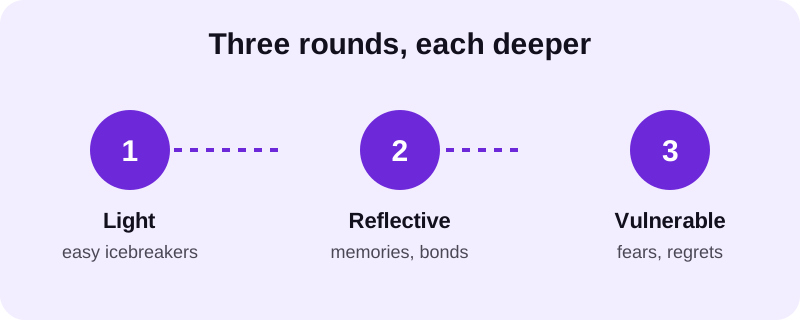
The order matters because each round builds trust for the next one. Skipping straight to round three without warming up through rounds one and two tends to feel awkward or forced, since you haven't earned that level of openness yet with this particular conversation. Think of the first two rounds as the on-ramp, not filler to get through quickly.
How Do You Actually Use the 36 Questions?
Sit somewhere quiet, put your phones face down, and take turns — one of you reads the question aloud, both of you answer it, then you switch who reads next. Go in order, one full round at a time, and resist the urge to read ahead to see what's coming.
Give each question room to breathe. A good answer to "what's your most treasured memory" usually takes a minute or two once you start adding detail, not a single sentence. If one of you answers quickly, the other can ask a simple follow-up — "what made that moment stick with you?" — before moving to the next number.
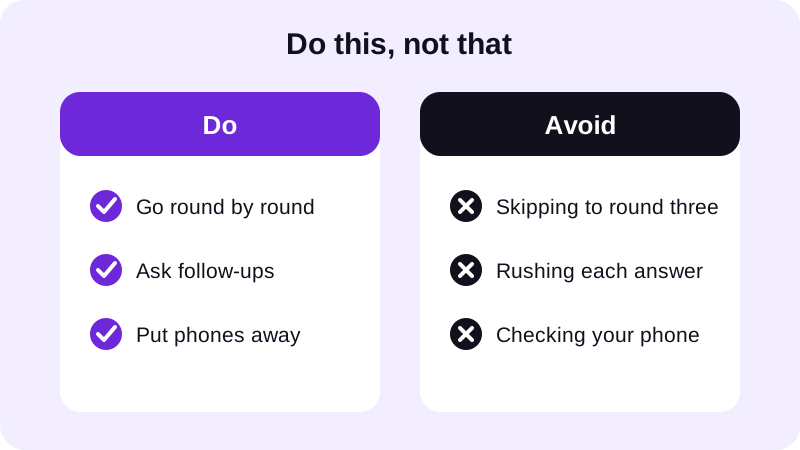
Most couples finish in under two hours, but there's no clock you need to beat. If a question feels too raw for that particular night, swap it for the next one in the set rather than skipping your turn entirely — the goal is honest answers, not a completed checklist. The original exercise famously ends with several minutes of silent eye contact. You can try that too, or simply sit quietly with what you've both just said before talking about something lighter.
Can the 36 Questions Work for Long-Distance Couples?
Yes — the exercise doesn't require the same room, it requires full attention from both people. A video call works just as well as sitting across a table from each other, as long as you both set everything else aside for the length of the conversation. Close extra tabs, silence notifications, and treat the call as the entire evening's plan rather than something squeezed between other tasks.
If you want the night to feel like an actual date instead of a homework session, pair the questions with ideas from our virtual date night ideas, or build the whole evening around them using a long-distance date night that isn't just another ordinary call. Light a candle on your end, make a drink you'd order on a real date, and start the first round once you're both settled instead of mid-chore.
Some couples split the exercise across two nights — rounds one and two on a Friday, round three on a Saturday — so the deeper questions get their own unrushed evening instead of being squeezed in right before bed after an already long day. There's no rule that says all 36 need to happen in one sitting, and spreading them out can actually make round three land harder, in a good way.
What Happens After You Finish All 36 Questions?
Finishing the list isn't really the goal. It's proof that this kind of deliberate, turn-by-turn conversation works for the two of you, and that it's worth repeating in smaller doses on ordinary nights, not just once as a milestone. That's the idea behind the app's Deep Talks card category, one of 360 love game cards alongside Truth or Dare, Fun & Chaos, and Daily Questions, so you always have a next question ready instead of starting from a blank page.
A daily question keeps that same spirit alive on an ordinary Tuesday, when you don't have ninety free minutes for all 36 at once. Our daily question ideas for couples and 50 questions to ask your partner tonight are good places to pull a prompt from when you want something smaller than a full round. Pair the habit with a Shared Diary to save the answers that mattered most, a Love Counter to mark how long you've been building this kind of closeness together, and a Couple Widget so the next question is always one glance away.
If the three rounds left you wanting more conversations like that one, deep talk questions for couples is the natural next stop — same spirit as round three, just a fresh set of questions each time you sit down together. And if an anniversary or another milestone is coming up, questions to ask before an anniversary turns that same honest, turn-by-turn format toward looking back at the year you've shared.
How long does it take to go through all 36 questions?
Most couples need 45 to 90 minutes, depending on how long you linger on each answer. Round one moves fast since the questions are light. Round three slows down naturally because the questions ask for more reflection, so don't rush it or set a timer.
Do both people have to answer every question?
Yes — the exercise works because you take turns asking and answering the same question, not just one person interviewing the other. If a question feels too personal for that night, it's fine to swap it for a different one instead of skipping your turn entirely.
Can you do the 36 questions over video call?
Yes. The questions don't need physical closeness to work — they need honest answers and full attention. Close other tabs, keep the camera steady, and treat it like a real conversation rather than a quiz you're reading off a screen.
What if we already know each other well?
The questions still surface new details, because most couples never sit down and deliberately ask about fears, regrets, or what they'd change. Long-term couples often say round three brings up something they'd never actually discussed out loud before.
What should we do after finishing all 36 questions?
Keep the habit going with smaller versions of it — a daily question, a deep conversation prompt, or a game night with question cards. The 36 questions work because they're a ritual, and rituals are worth repeating in smaller doses.